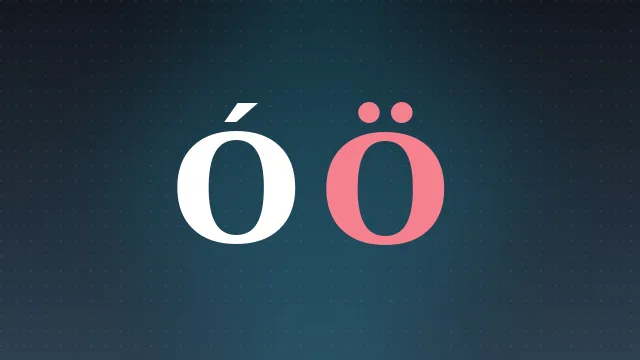
Searching for an O with an accent above it is common, because the marks that sit on top of the letter are the ones people notice first. But above the O there are at least eight different marks, and picking the wrong one changes the word. This guide lines them up so you can tell them apart and choose the right one.
Why So Many Marks Sit Above
The space above a letter is the natural home for a diacritic, so most of the world's accent marks live there. On the O alone you can find the acute, the grave, the circumflex, the tilde, the two dots, the macron, the breve, the caron and the double acute. Each is a distinct Unicode character with its own meaning.
The Everyday Four
Four marks cover the vast majority of real writing. The acute Ó is a single stroke rising to the right. The grave Ò is a single stroke rising to the left. The circumflex Ô is a small upward roof. The two dots Ö are the umlaut or diaeresis. If you can recognise these four, you can read most accented O text you will ever meet.
Think of the single strokes as arrows: the acute points up and to the right, the grave up and to the left. That one distinction resolves the most common mix up.
The Wave And The Bar
The tilde Õ is a horizontal wave, used mainly in Portuguese to mark a nasal vowel. The macron Ō is a flat horizontal bar marking a long vowel, seen in Latin and romanised Japanese. They are easy to confuse at a glance, so look for the curve: the tilde ripples, the macron is straight.
The Cups And Checks
The breve Ŏ is a small cup opening upward, marking a short vowel. The caron Ǒ is a small check or downward point, used in Mandarin pinyin. The double acute Ő is two acute strokes side by side, a Hungarian mark. These are specialist and rarer, but the tool includes them all.
Choosing Between Them
The reliable method is to start from the language rather than the shape. Portuguese wants the tilde and circumflex; Spanish wants only the acute; German wants the two dots; Hungarian wants the double acute. Once the language is fixed, the choice is usually obvious. When you want to compare shapes directly, the finder displays each character large enough to see the difference clearly.
Related Marks Elsewhere
Not every O accent sits above. The stroke passes through the letter and the ogonek hooks below, and both are covered in the full accent mark guide. If your search was really about the two dots specifically, the O with two dots guide goes deeper on that one mark.
In Summary
Above the letter O sit a whole row of marks, from the everyday acute, grave, circumflex and two dots to the specialist tilde, macron, breve, caron and double acute. Tell them apart by shape when reading, choose between them by language when writing, and copy the exact one you need from the finder.